
Conclave Part I
A Short Version History of the Catholic Church

As we enter another time of transition in the Roman Catholic Church, allow me this exploration of the Pluto Out-of-bounds cycle as it plays out over centuries of Catholic history.
Remember this diagram.
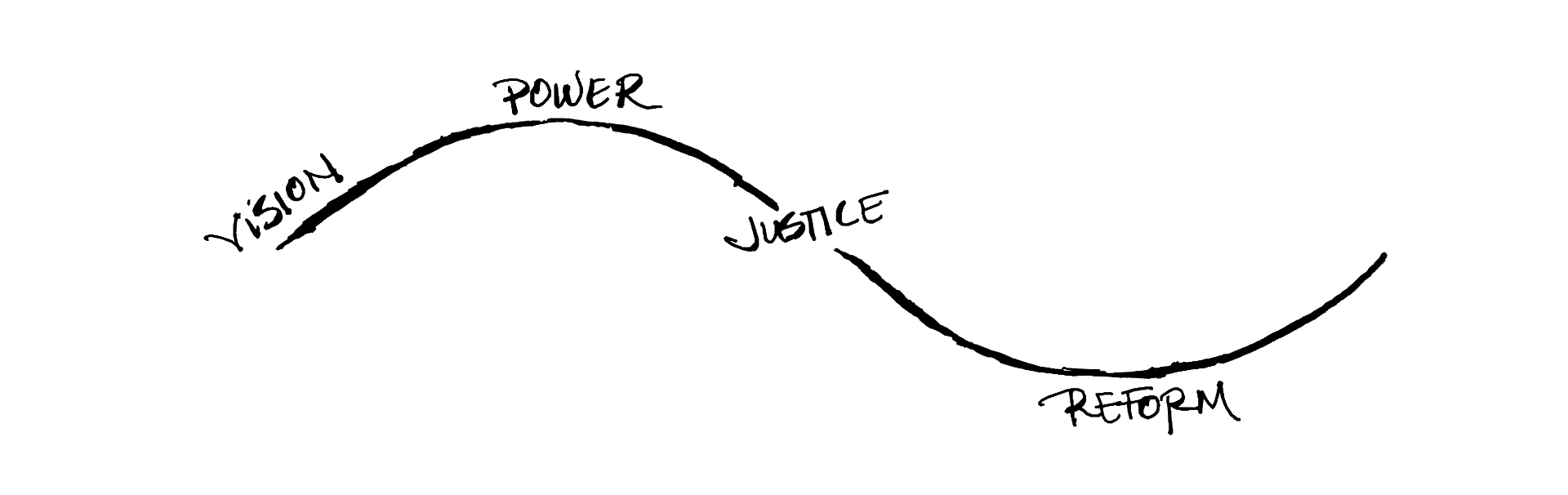
Vision is Pluto at 00 degrees declination south to north.
Power is Pluto out-of-bounds (oob) north.
Justice is Pluto at 00 degrees declination north to south.
Reform is Pluto oob south.
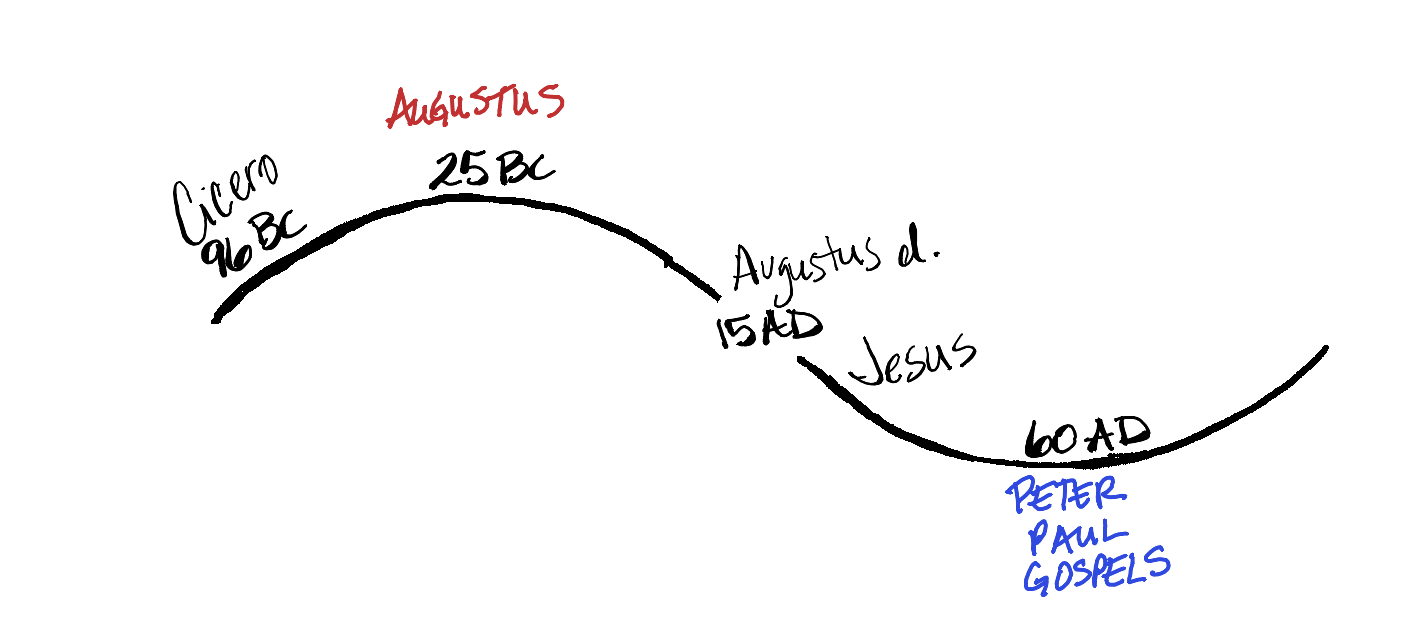
In the beginning was the Roman Republic, and a politician named Cicero wrote the “Just War” doctrines, as in sometimes war is a good and necessary thing for the good people to get ahead. He inspired Julius Caesar, who took the Just War thing a bit too far when he crossed the Rubicon River into Pompey’s territory, just as Pluto went OOB North, Power. Pompey was supposed to be his buddy in the trio of rulers (called the Triumvirate), but alas they had issues. After Julius won the battle and was making headway, his friends in the Senate killed him because they wanted to keep Rome a republic. But then Octavius turned it into an empire anyway when he became supreme ruler Augustus Caesar just as Pluto was peaking during Power. During the Justice time, a young upstart named Jesus taught about love and how to be a good neighbor and railed against the corruption in the Roman Empire and triggered the Jewish leadership. He was killed for it. During the Reform time, Jesus’ friends shared his teachings through writing the Gospels and started a church in his name. Saul of Tarsus (St. Paul) who never met Jesus wrote down teachings he heard in a bunch of letters to folks in Rome and Corinth (Greece), letters still read at mass and at weddings. Both Paul and Peter were executed at the peak of Reform, solidifying their role in history and igniting the Christian movement.
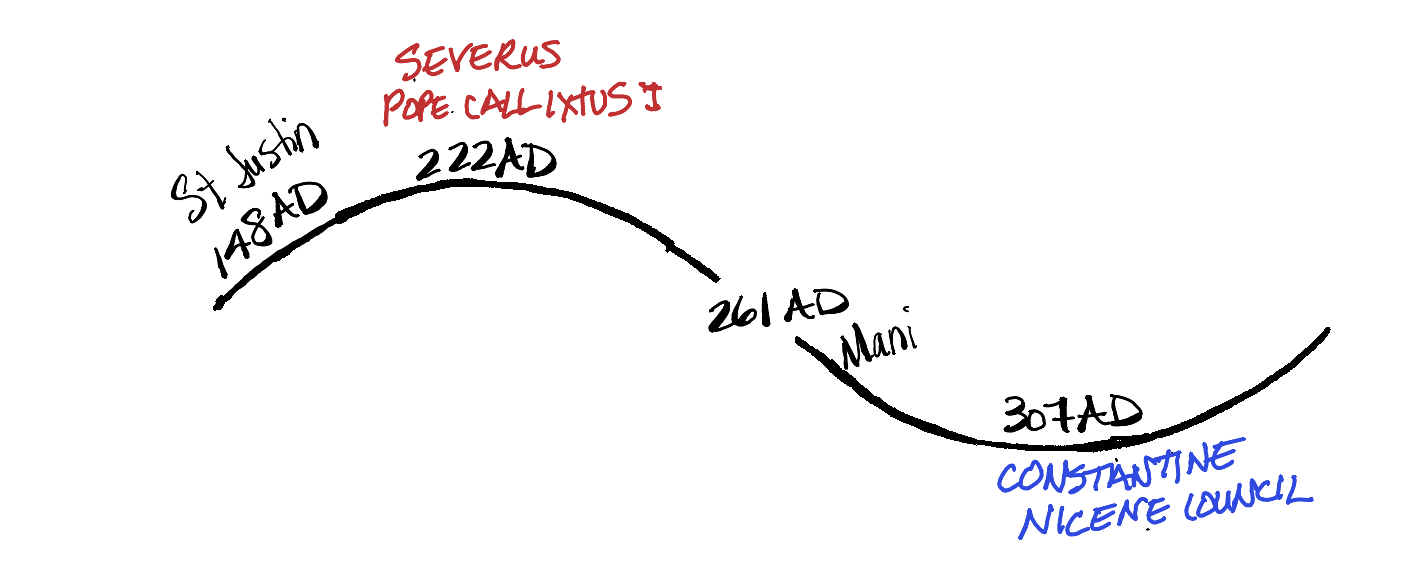
In the beginning of the next cycle, a Greek philosopher, named Justin, later called Justin Martyr, combined the teachings in the gospels with the teachings of Aristotle and other Greek philosophers. His writings informed the direction of Christianity during a time when Christians were being killed. At Power, Pope Callixtus was killed in a slew of Christian killings. By the time of Reform, Emperor Diocletian worked overtime to put down the Christian movement killing thousands of Christians in just a few years. Diocletian died and the next Emperor, Constantine, took a radically different approach. He convened a council, the Nicene Council (306), to create the core doctrines of a new religion for the Christians and then made Christianity legal. Then he converted to this new religion (312). Constantine made sure to keep the pagans happy, continuing to support their holy days by making the Christian holy days align with the pagan ones, basically allowing freedom of religion.
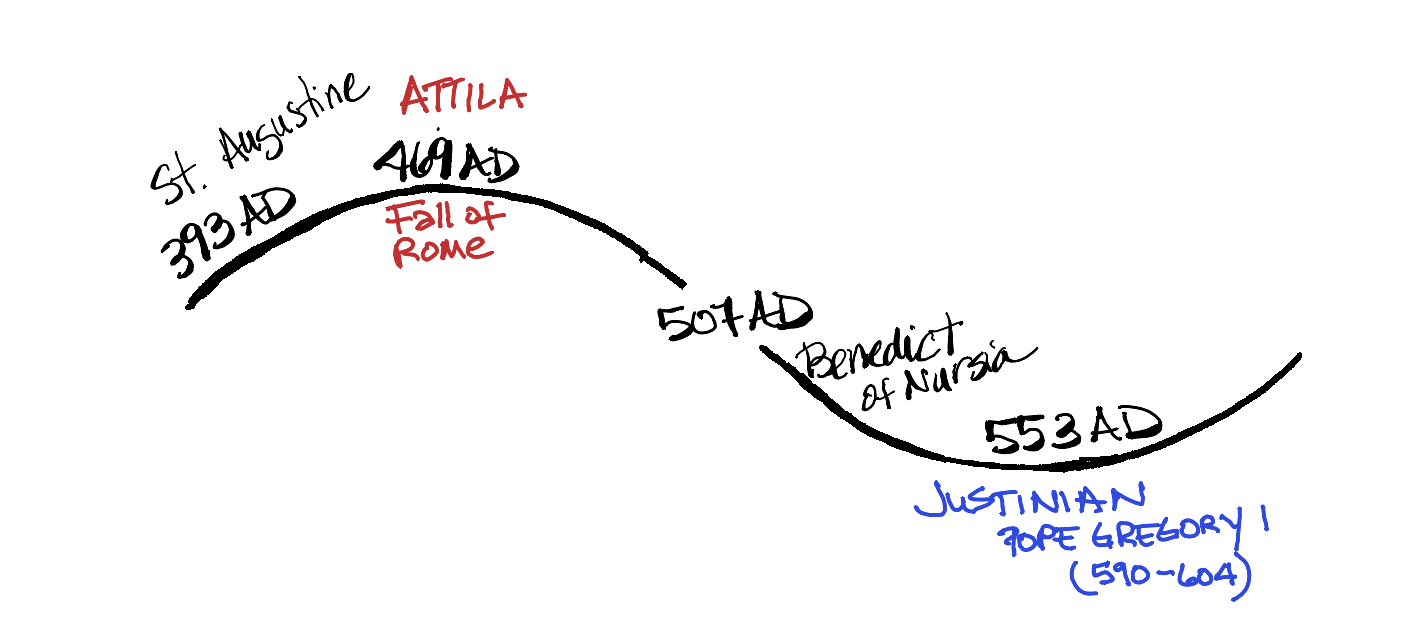
In the beginning of the next cycle, the visionary is none other than Augustine of Hippo, the man who invented sin, original sin, heaven and hell, and evil. Okay . . . not exactly, but he often gets credit for these things. His teachings gave hope during a time when the Roman Empire was falling apart. It was at this Vision time that the Roman Emperor Theodosius forced all people in the empire to convert to Christianity. His soldiers destroyed the Library in Alexandria and killed Hypatia among other scholars at the time. At Power, Attila the Hun, along with the Visigoths, and the Vandals, invaded and took over the decaying Roman Empire. During this Justice time, Benedict of Nursia had an awakening experience and started his own monastic code. His work has inspired centuries of Benedictine monks and social justice activists. At Reform, the Emperor Justinian of the recently formed Byzantine Empire (330 - 1543) instituted legal reforms that benefited the people.
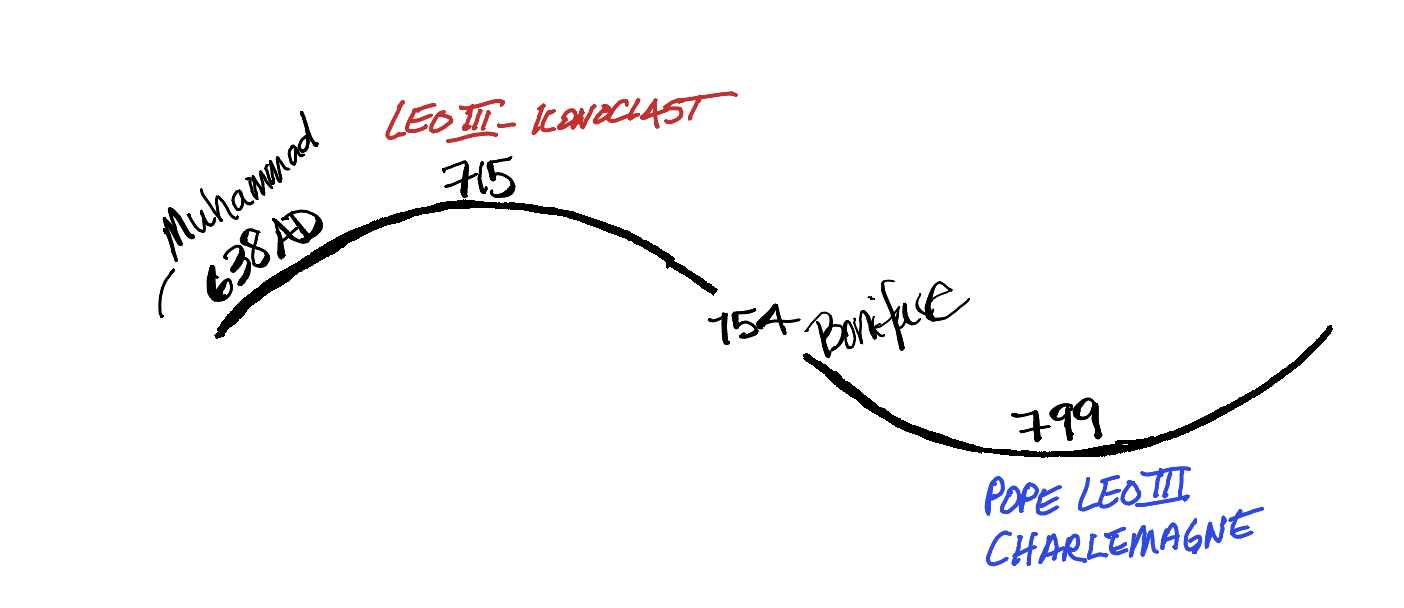
In the beginning of the next cycle, the visionary Muhammad (c. 570 - 632) lived down in the deserts of Arabia. Muhammad started his own religion and his followers took the work in a very different direction than Christianity. At Power, while the followers of Muhammad were building an empire, the Christian Byzantine Emperor, Leo III, started a nasty time period of destroying all the icons—statues and artwork—of the Christians and others. During Justice, the monk, St. Boniface, helped the Church form an alliance with Germania and the Francs (roughly Germany and France of today). During Reform, the pope blessed Charlemagne’s coronation and the two started a pact that merged church and state into what later became the Holy Roman Empire1. The Carolingian Renaissance (800 - 887) that Boniface made possible, began with Charlemagne and introduced a time known for its art and architecture.
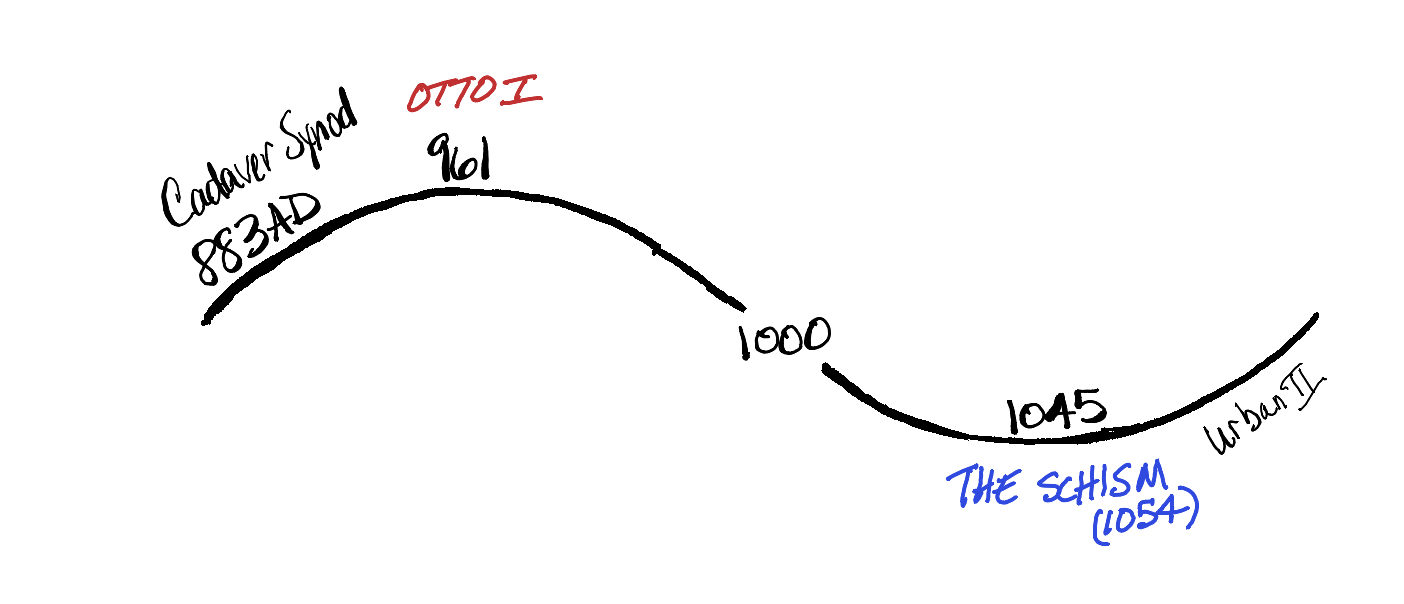
The beginning of the next cycle included a rather twisted time period in Church history. It was called the Cadaver Synod. It involved the cadaver of Pope Formosus (p. 891 - 896) that was put on trial (897) by the pope who succeeded him, found guilty and the three fingers used for blessing were cut off the corpse. The pope that followed after that was still pissed at Formosus, so he had the body dug up again and put on trial again, and this time decapitated. This began a dark time in the church that lasted throughout this cycle. During the Power time, Otto the Great, often given credit for starting or expanding the Holy Roman Empire (962 - 1806), used the support of the papacy to enhance his ambitions. During Justice, it seemed like the whole world started writing great works including the Tale of Genji in Japan, Beowulf in England, and for the Catholics, Burchard of Worms wrote the Decretum, a work of canon law for the Church. By Reform, the Church fell apart into what is known as “The Schism” (1054). For various reasons of doctrine and politics, the Russians and the Greeks split off from the Catholic Church and formed the Russian Orthodox (c. 988 between Power and Justice) and Greek (aka Eastern) Orthodox Churches (c. 1054). At the very end of the cycle, Pope Urban II tried to strengthen the power of the church by sending crusaders to attack and conquer Jerusalem, which they did.
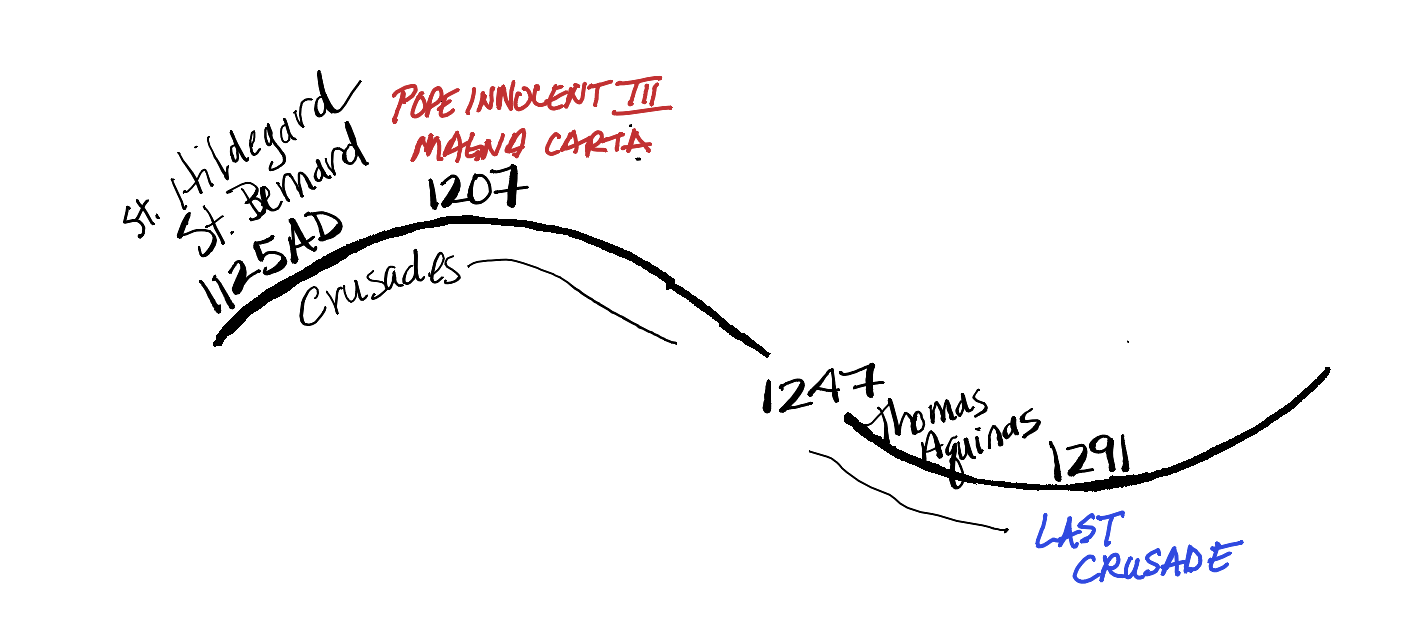
At the beginning of this cycle, St. Bernard of Clairvaux, a well-known Cistercian monk supported his friends who had just formed the Knights Templar Order (1118 - 1312) by talking his friend, the pope, into giving the knights his blessings. The Knights Templar Order was formed to protect the pilgrims and crusaders as they traveled through Europe to Jerusalem. The knights did more than protect them. They developed a sophisticated banking system to protect the pilgrims’ money as well. Then St. Bernard wrote the textbook for the knights so that they would be chivalrous and not kill women and babies. During the time of Power, Pope Innocent III, who regularly tops the most-powerful-pope-in-history Google searches, initiated some particularly diabolical crusades. Since Saladin, the founder of the Ayyubid Dynasty (Egypt to Syria area), had built an army powerful enough to defeat the crusaders, and had taken back Jerusalem, Innocent sent the crusaders to attack the Cathars in France. The Cathars were seemingly peace-loving, early-version hippies, who Dominic of Osma (responsible for the Dominican Order that was later responsible for the Spanish Inquisition) despised for some reason. Dominic talked Pope Innocent into eradicating them, and the pope sent French people to kill other French people. (Sigh. The Power time does that.) Meanwhile, another group of crusaders in 1202 got lost or forgot their instructions and went and attacked the Christian city of Constantinople (Oops!). At the Justice time, St. Thomas Aquinas, a fan of Aristotle, combined faith and free will, wrote about Natural Law and logic, during the same time period that Bishop Robert Grosseteste and Friar Roger Bacon were forming the roots of a scientific movement. At the peak of Reform, in exactly the year 1291, the last crusade dragged their feet home after being defeated at Acre. The knights dispersed. Some went to form the first (and still only?) direct democracy in the world, Switzerland. Some went to Portugal and Scotland where they started secret and mysterious orders that are food for Dan Brown novels.
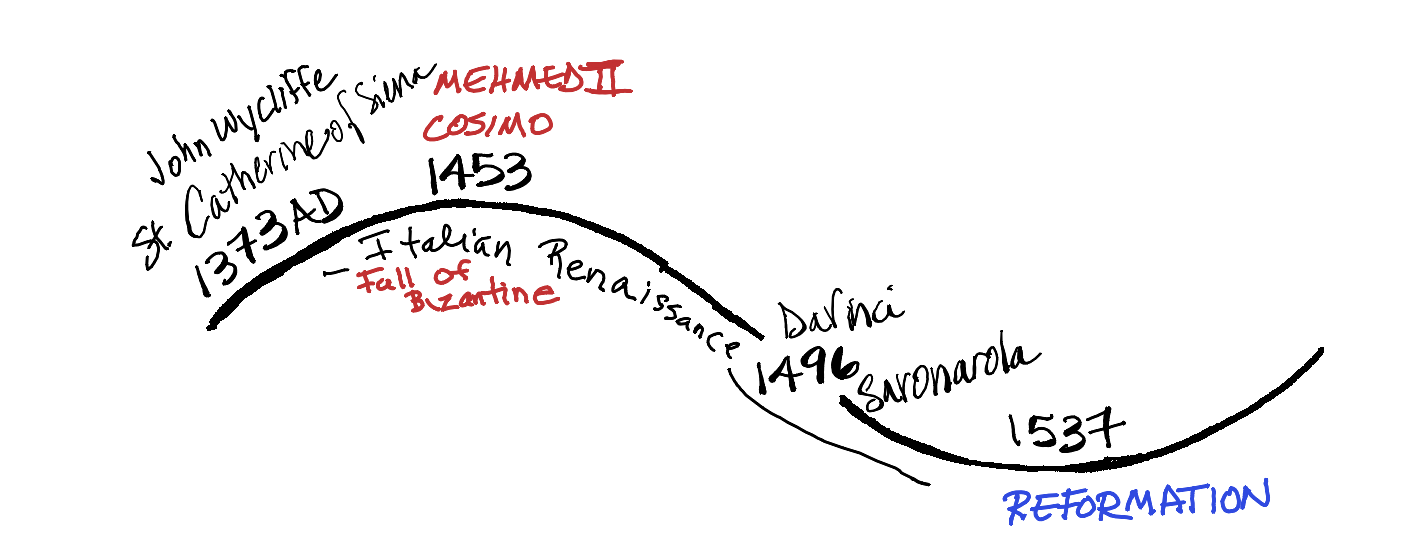
In the beginning of the next cycle, while the Church was in another schism with one pope in Rome, Italy and another pope in Avignon, France, my favorite mystic saint, St. Catherine of Siena, lived. This badass 18-year-old rode a horse from Siena to Avignon, probably taking a month, managed to get an audience with the pope and tried to convince him to make up with the Italian pope in Rome. Eventually they did and Rome continued to be the center of the Catholic Church, thus the name Roman Catholic Church. Another visionary at Vision was John Wycliffe, a professor monk, in England who started speaking out about the corruption in the Catholic Church. At Power, Cosimo de Medici wrangled himself into the good graces of the pope and the pope’s coffers. Taking over the Vatican Bank, a huge source of wealth at the time, Cosimo moved into a great deal of power and influence. Meanwhile, the Byzantine Empire fell when Mehmed II, the leader of the Ottoman Empire, conquered the city of Constantinople. Constantinople was a strategic port city, and Mehmed took advantage of that by blocking trade routes between Europe and Asia. This led to the Catholic Church instituting policies against the Muslims, that were broad enough to include all non-Christians. At Justice a whole bunch of stuff went down. Lorenzo de Medici, Cosimo’s grandson and current leader of Florence, died and left Florence in the hands of his son, who wasn’t up for the job. This opened the doors for a fire-and-brimstone Dominican monk, Savonarola, who went on a sermon-binge, shouting out against the corruption in the church. Meanwhile, the newly elected Spanish pope, Alexander VI (Rodrigo Borgia) benefited from Columbus’ trip across the Atlantic, signed the Treaty of Tordesillas, split up the newly discovered lands across the Atlantic between Portuguese and Spanish conquistadors and then sent his own General son, Cesare, on a campaign of battles. By the time of Reform, several Catholic monks, Martin Luther and Huldrych Zwingli (and others) woke up the masses with missives and sermons that led to massive demonstrations called the Reformation, that led to more splitting in Christian-dom.
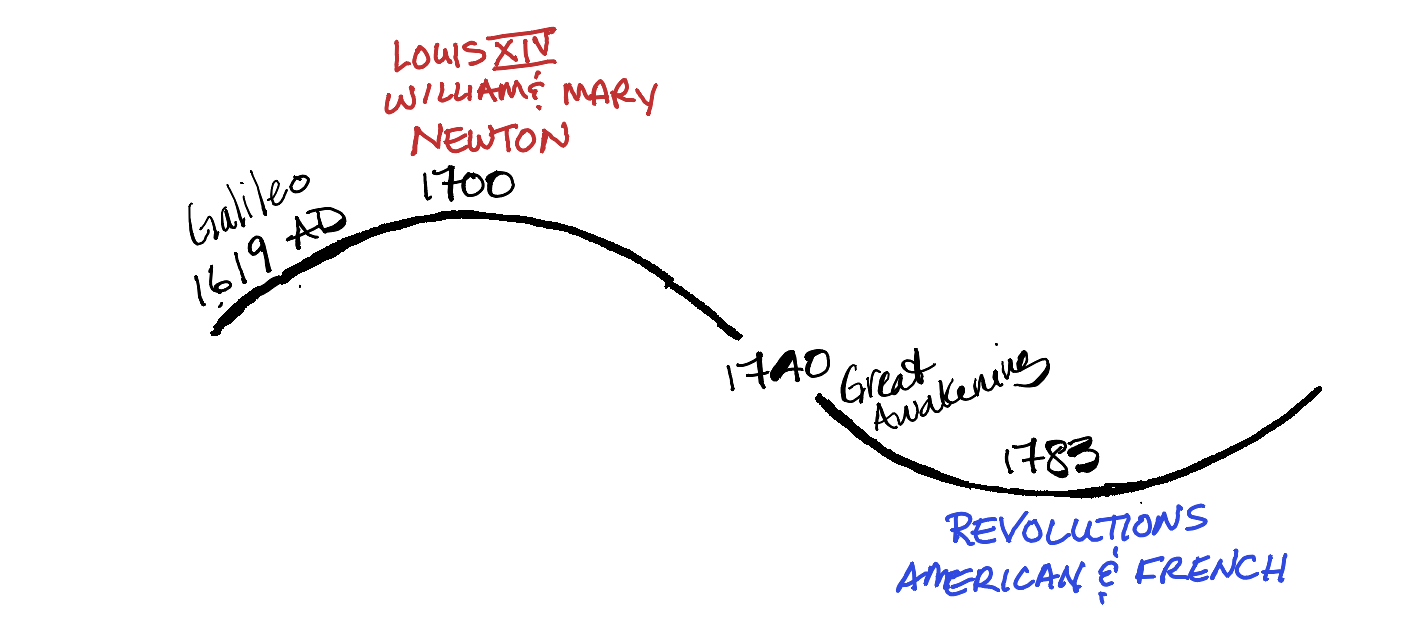
In the beginning of the next cycle, Galileo, a Catholic who considered becoming a monk, saw the moons of Jupiter with the newly invented telescope that led people to think that if they could see the invisible then maybe they could control nature. He brought out the work of Copernicus and was imprisoned for it (house imprisoned). At the same time, Francis Bacon in England started a movement called “science” from the Greek “to separate”, as in the separation of mind and spirit. The idea that we could separate out parts and study them empirically, was a new vision that supported the distancing of intellectuals from the Church, while the newly growing Protestant sects were getting established. By the time of Power, the Royal Society of London, a bunch of dudes smoking cigars in red velvet chairs (at least that’s what it looks like in my mind) decided to really separate church and state by taking all the mystery out of gravity (Newton) and pressures (Boyle) and politics (Locke) and commerce (East India Trading Company). By Justice, David Hume and Voltaire and other “Enlightenment” thinkers were stirring up trouble in the colonies and in France. By Reform, all that Enlightenment talk emboldened colonists in the invaded territories of the “New World” and some radical French activists in the “Old World” to start revolutions and create a real and lasting separation of church and state.
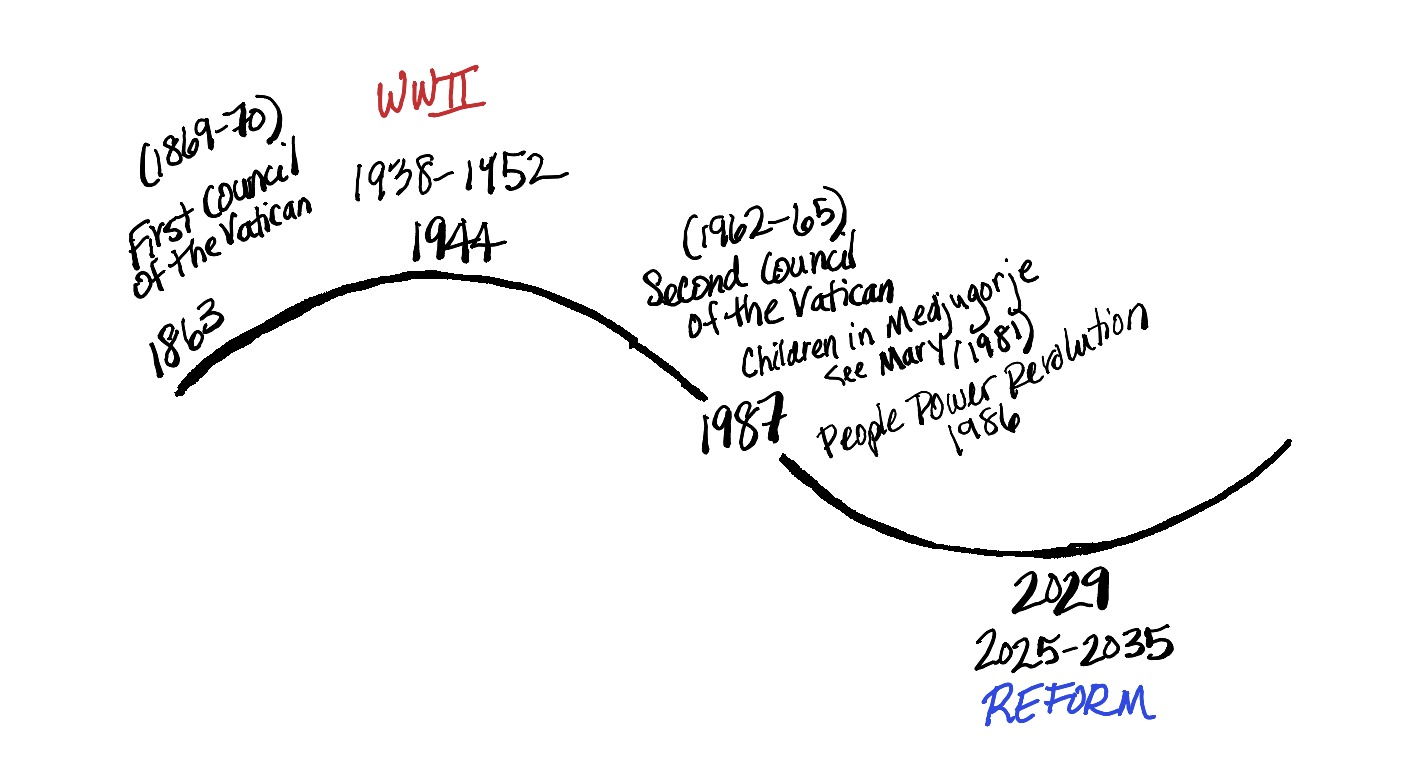
In the beginning of the next and current cycle, Italy was in the midst of a civil war that ended with Italy making the Vatican its own country, asserting a separation of church and state there. The pope protested by never leaving Vatican City and convening a council to rewrite some doctrine, notably making the pope infallible. By the Power time, World War II raged on while the Catholic Church did nothing, or rescued lots of people, or helped both sides, or did too much, depends on who is telling the story. The controversies plagued the next generation of popes. A Polish pope was a holocaust survivor, and a German pope reportedly helped the Nazis. During the Justice time, child-molestation charges revealed hidden and rampant corruption within the Church, eventually forcing the Church in the lead up to Reform to do some house-cleaning.
Conclusion
Let’s look at past Reform times, Paul and others wrote the first doctrines of the Church. In the next cycle, Constantine convened the Nicene Council to create the official doctrines of the Church. Then Justinian wrote reforms in the first wholly Catholic empire, the Byzantine Empire. Then Pope Leo III blessed the coronation of Charlemagne cementing the relationship between church and state. Then there was The Schism, when the doctrines of the Greek Orthodox Church were written separate from the Roman Catholic Church. Then there was the Last Crusade when the Church retreated from policies of expansion. Then there was the Reformation that challenged indulgences and the very nature of the Church. Then there was the American and French Revolutions, where the separation of church and state became official, and the French arrested the pope.
In each of these times, the Catholic Church went through a radical transformation where core doctrines were written or changed or tossed. Each time was an event that changed the course of the Church forever. Each time period began with Christians being persecuted or challenged and then evolving. Each time, the corruption in the Church was challenged and forced to change. The Catholic Church has seen some very large swings in its near 2,000 years of existence. What some of us cradle Catholics today perceive as a rigid institution with hard rules and unwavering misogyny and homophobia, is really more of a flexible institution that has adjusted to public pressure many times in the past, particularly at Reform times. It is just slower moving than most of us can see.
As we enter the next Reform time, in September of 2025, we might be looking at another split, or another rewriting of the doctrines. In any case, it will be interesting, significant, and transformative. Hold onto your hats. The next pope is about to make some waves (and he isn’t even elected yet).
More on this current cycle in Conclave Part II.
Some historians consider the beginning of the Holy Roman Empire to be during the time of Charlemagne (means Charles the Great), and some consider it during the time of Otto the Great. I’m going with Otto since he was more of an empire builder, while Charlemagne is know more for the Carolingian Renaissance and reforms. However, as everything is in history, it depends on what side you are on.